




Summary: Charities often keep supporter data in separate systems, so fundraising and communications teams lack a shared view. This Chorus guest article argues that connecting them in Dynamics 365, using tools like Evo 365 and Click, enables relevant, behaviour-based supporter journeys. Charities don’t need more data, just better use of what they have.
Guest article by Chorus
Charities manage some of the most complex relationships of any organisation. A single supporter might be a donor, event attendee, volunteer, member or campaign advocate, sometimes all at once.
Yet the data behind those relationships often lives in different places. Fundraising teams may manage pipelines and stewardship plans in spreadsheets or CRM, while communications teams work from separate marketing platforms and lists.
The challenge isn’t simply managing more data. It’s creating a connected view of supporters that helps teams understand who someone is, how they have engaged, what matters to them and what the next best interaction should be.
For charities using Dynamics 365, this typically means bringing together three layers: the CRM foundation, charity-specific fundraising processes, and the marketing automation needed to turn supporter data into relevant communications.
What Should a Connected Charity CRM Enable?
A modern charity CRM needs to do more than store contact details. It should help fundraising, membership, and communications teams work from the same understanding of every supporter.
There are several capabilities charities should consider when evaluating their approach:
A 360-degree supporter view
Donation history, interests, communication preferences, event involvement, meetings, emails and other interactions should contribute to a shared supporter record. When teams have access to the same information, conversations can become more relevant and coordinated.
Structured fundraising processes
Fundraisers need visibility into prospects, cultivation activities, applications, stewardship commitments and next actions. Bringing these processes into CRM can reduce reliance on spreadsheets while making opportunities and responsibilities easier to manage.
Gift Aid and income management
For UK charities, donation and Gift Aid information need to connect back to the supporter. Keeping declarations, eligibility, payments and fundraising information connected creates a clearer financial and relationship history.
Membership management
For membership organisations, payments, renewals, engagement and communications shouldn’t operate as entirely separate processes. Connecting them makes it easier to understand the full relationship with each member.
Reporting and next actions
Good CRM strategy isn’t just retrospective. Teams should be able to understand fundraising performance while also seeing upcoming deadlines, expected income, stewardship commitments and the next activity associated with an opportunity.
Meaningful audience segmentation
One of the biggest advantages of connected supporter data is the ability to move beyond broad mailing lists.
Instead, charities can build audiences around information such as interests, donation history, previous campaign activity, event participation, engagement and communication preferences.
Supporter journeys based on behaviour
Communications can become significantly more relevant when they respond to what supporters actually do.
A first donation, event registration, lapsed membership or change in engagement can all become triggers for timely communications rather than relying entirely on manually scheduled campaigns.
The Real Opportunity is Connecting Fundraising and Communications
The underlying CRM is important, but supporters rarely experience the CRM itself.
They experience the communications it enables.
A fundraising relationship might unfold across emails, events, meetings, donations and follow-ups over months or even years. If those activities exist in separate systems, organisations can struggle to understand the complete relationship.
Connecting fundraising and communications changes that.
“We pair Evo 365 with Click because bringing supporter data and communications together is really important. It means charities can use the information they already hold in Dynamics 365 to create more relevant, targeted communications and build stronger relationships with their supporters.”
— Ben Davies, Head of Growth, Chorus
For example, imagine a supporter who:
- attends a fundraising event;
- engages with follow-up content;
- makes their first donation;
- develops an interest in a particular programme; and
- later becomes a recurring donor.
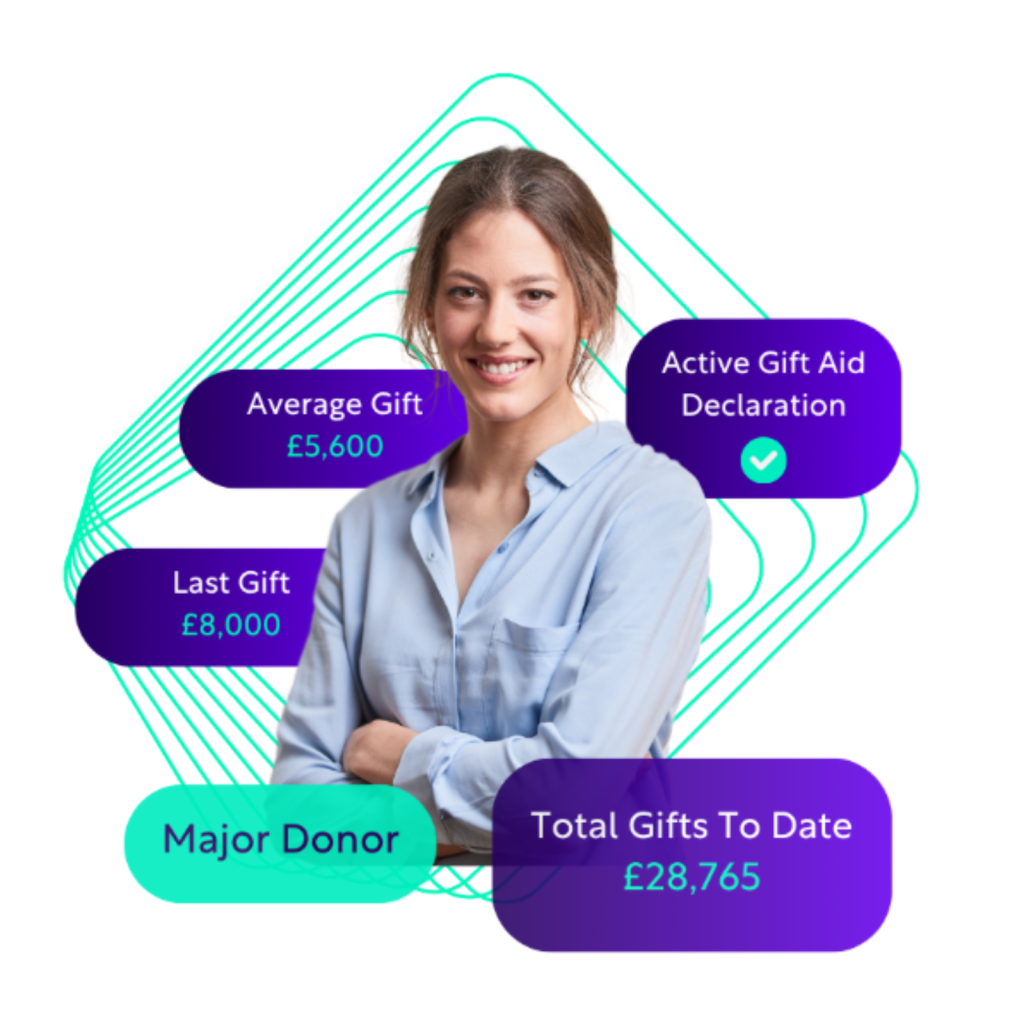
Rather than treating those as unrelated transactions, connected data allows the charity to build a continuously developing picture of that relationship.
Communications can then reflect where that supporter actually is in their journey.
That’s ultimately the shift modern charities should be aiming for: moving from campaign-centric communication to supporter-centric engagement.
From mass communication to relevant supporter journey.
Many charities have large volumes of valuable supporter data but aren’t necessarily using it to shape communications.
When CRM and marketing automation are connected, that data can become actionable.
Instead of sending the same fundraising appeal to an entire database, organisations can segment supporters based on characteristics such as:
- previous donations and giving frequency;
- interests and causes supported;
- event participation;
- membership status;
- previous campaign engagement;
- communication preferences; and
- stage of the supporter relationship.
Automated journeys can then respond to those signals.
A first-time donor could enter a welcome and stewardship journey. A supporter who regularly attends events but hasn’t donated could receive different communications. A long-standing donor whose engagement has declined could receive a re-engagement journey.
The objective isn’t simply to automate more email.
It’s to make communications more relevant, more timely and more reflective of the relationship the supporter already has with the organisation.
Choosing the Right Approach in Dynamics 365
Microsoft Dynamics 365 provides charities with a flexible CRM foundation, but organisations still need to consider how charity-specific processes such as fundraising, Gift Aid, membership and supporter engagement will be managed.
The key decision is often how much to configure from the ground up versus where to use purpose-built solutions that extend Dynamics 365.
For some organisations, bespoke configuration may make sense where processes are highly specialised. For others, using proven charity-focused solutions can provide a faster starting point while retaining the flexibility of Dynamics 365 and the wider Microsoft ecosystem.
Whichever approach a charity takes, the goal should be the same: create a connected environment where fundraising, supporter data and communications work together.
Rather than asking simply “Which CRM functionality do we need?”, charities should be asking:
How can we use the data already in Dynamics 365 to better understand our supporters, strengthen relationships and drive fundraising outcomes?
What Good Looks Like
For charities considering their next CRM or supporter engagement project, there are a few useful questions to ask:
- Can fundraising and communications teams work from the same supporter data?
- Can we understand a supporter’s complete history rather than just their latest transaction?
- Can we segment audiences and trigger communications using live CRM data and supporter behaviour?
- Can we measure how communications contribute to engagement, retention and fundraising outcomes?
If the answer to several of these questions is no, the challenge may not be a lack of data. It may be that the organisation isn’t connecting and activating the data it already has.
Bringing it Together with Dynamics 365
For organisations committed to the Microsoft ecosystem, Dynamics 365 provides a strong foundation for bringing supporter information together.
The next step is building the charity-specific fundraising and engagement capabilities around that foundation.
This is where specialist solutions can help organisations build on Dynamics 365 without having to create every capability from scratch. Chorus’s Evo 365 supports charity-specific processes such as fundraising, Gift Aid, income and membership, while Click helps organisations use the supporter data held in Dynamics 365 for segmentation, marketing automation and automated supporter journeys.
Together, the goal isn’t simply to add more technology. It’s to help fundraising and communications teams work from the same supporter data and use it to build stronger, more relevant relationships.
Final Thoughts
Charities don’t necessarily need more supporter data. Most already have a huge amount of it.
The opportunity is to make that data more connected and useful.
When fundraising activity, supporter information and communications work together, teams can spend less time managing spreadsheets and disconnected lists and more time understanding supporters, developing relationships and creating meaningful engagement.
And ultimately, that’s what good nonprofit technology should enable.
If your organisation is exploring how to better connect fundraising, supporter management and communications within Microsoft Dynamics 365, Chorus and Click can help. Whether you’re looking at CRM and charity-specific processes, segmentation, marketing automation or supporter journeys, we’d be happy to talk through the right approach for your organisation.
About Chorus
A big thank you to the team at Chorus for contributing their expertise to this guest article and sharing their perspective on how charities can get more from Dynamics 365.
Chorus is a Microsoft Solutions Partner specialising in Dynamics 365 consultancy and development. Its Evo 365 solution extends Dynamics 365 with charity-specific capabilities across fundraising, Gift Aid, income and membership management, helping charities build their processes around the Microsoft technology they already use.